
Germany Section Circuits and Systems Society Chapter
Upcoming events
- Future technical meetings of the German Chapter of the IEEE Circuits and Systems Society will be announced here.
Recent past events
- Analog and Mixed Signal Circuits and Systems for Emerging Applications: Distinguished Lecture by Prof. Bibhu Datta Sahoo of the University of Buffalo
4 September 2025, RWTH Aachen, Helmholtz-Institut für Biomedizinische Technik
5 September 2025, University of Siegen(4 September 2025)
Helmholtz-Institut für Biomedizinische Technik
RWTH
Aachen, Nordrhein-Westfalen
Germany 52074
Building: Seminarraum 2.70, Pauwelsstraße 20and
(5 September 2025)
Hoelderlinstrasse 3
Siegen, Nordrhein-Westfalen
GermanyDescription of the Talk
Quantum Computing, having the ability to exponentially enhance the raw computing power, and Artificial Intelligence (AI), having the ability to impart unprecedented intelligence to connected devices through algorithms that learn, are the two key technologies of the 21st century. Although novel devices can significantly advance the field of quantum computing, conventional CMOS based analog and mixed signal circuits can enable quantum computing using classical op amp based circuits. AI algorithms on the other hand are tolerant to errors in computation, thereby enabling approximate and low-precision computing which has resulted in the resurrection of more than half-a-century old analog computing.
This talk would present various analog computing techniques that could enable AI algorithms or more specifically machine learning (ML) algorithms. The talk could also delve into mixed-sginal computing where it will dive into the details of in-memory computing as well as adoption of novel memory devices, viz., memristors, to enable energy efficient computing. The talk would also present some classical analog hardware for emulating quantum algorithms, like Grover’s search algorithm, for quantum computing systems.
Speaker Biography
Bibhu Datta Sahoo (Senior Member, IEEE) received the B.Tech. degree in electrical engineering from Indian Institute of Technology at Kharagpur, Kharagpur, India, in 1998, the M.S.E.E. degree from the University of Minnesota, Minneapolis, MN, USA, in 2000, and the Ph.D.E.E. degree from the University of California at Los Angeles, Los Angeles, CA, USA, in 2009. From 2000 to 2006, he was with Broadcom Corporation, Irvine, CA, USA. From December 2008 to February 2010, he was with Maxlinear Inc., Carlsbad, CA, USA, where he was involved in designing integrated circuits for CMOS TV tuners. From March 2010 to November 2010, he was a Post-Doctoral Researcher with the University of California at Los Angeles. From December 2011 to April 2015, he was an Associate Professor with the Department of Electronics and Communication Engineering, Amrita University, Amritapuri, India. From January 2016 to April 2017, he was on sabbattical from Amrita University and was a Research Scientist with the University of Illinois at Urbana-Champaign. From August 2017 to August 2023, he was an Associate Professor with the Department of Electronics and Electrical Communication Engineering, Indian Institute of Technology at Kharagpur. Since September 2023, he has been a Professor with the Department of Electrical Engineering, University at Buffalo, The State University of New York. His research interests include data converters, signal processing, and analog and mixed signal circuit design. He received the 2008 Analog Devices Outstanding Student Designer Award and was a co-recipient of the 2013 CICC Best Paper Award. He was an Associate Editor of IEEE Transactions on Circuits and Systems—II: Express Briefs from August 2014 to December 2015. Since December 2018, he has been an Associate Editor of IEEE Open Journal of Circuits and Systems.
- Challenges and Opportunities for Ultra-Low Power Design for Quantum Computing Applications: Industrial DLP Lecture by Dr. Sudipto Chakraborty
18 November 2024, Hybrid
Fraunhofer-EMFT
Hansastraße 27 d,
Munich, Bayern
GermanyDescription of the Talk
This talk will cover practical challenges for cryogenic CMOS designs for next generation quantum computing. Starting from system level, it will detail the design considerations for a non-multiplexed, semi-autonomous, transmon qubit state controller (QSC) implemented in 14nm CMOS FinFET technology. The QSC includes an augmented general-purpose digital processor that supports waveform generation and phase rotation operations combined with a low power current-mode single sideband upconversion I/Q mixer-based RF arbitrary waveform generator (AWG). Implemented in 14nm CMOS FinFET technology, the QSC generates control signals in its target 4.5GHz to 5.5 GHz frequency range, achieving an SFDR > 50dB for a signal bandwidth of 500MHz. With the controller operating in the 4K stage of a cryostat and connected to a transmon qubit in the cryostat’s millikelvin stage, measured transmon T1 and T2 coherence times were 75.5μs and 73 μs, respectively, in each case comparable to results achieved using conventional room temperature controls. In further tests with transmons, a qubit-limited error rate of 7.76×10⁻⁴ per Clifford gate is achieved, again comparable to results achieved using room temperature controls. The QSC’s maximum RF output power is -18 dBm, and power dissipation per qubit under active control is 23mW. An improved, low power design version that achieves half of this power will also be presented.
Speaker Biography
Dr. Sudipto Chakraborty (B. Tech, IIT, Kharagpur, 1998, Ph.D from GaTech, 2002) was with Texas Instruments till 2016 where he designed low power IC for >10 product families in automotive/wireless/medical/microcontrollers. Since 2017 he led the low power circuit design for next generation quantum computing applications in IBM research using nanometer CMOS. He has authored or co-authored >85 papers, two books and 93 US patents. He has served in the TPC including ISSCC, CICC, RFIC, IMS, and is an IBM master inventor in 2022. He serves as an AE of the (TCAS – I) and distinguished lecturer in the IEEE CASS and SSCS.
- 2024 IEEE CASS Seasonal School on “Intelligence in Chips: Memristive Sensing & Bioinspired Computing Systems”
October 16-19, 2024, Online
https://www.intelligenceinchip.com/
Description of the Seasonal School Technical Theme:
We propose to organise the third seasonal school, continuing our highly successful CASS seasonal school in 2021 on “Intelligence in Chip: Tomorrow of IC” and 2022 on “Intelligence in Chips: Integrated Sensors and Memristive Computing”. Our past workshops were hosted by the Kerala chapter. This year, the German chapter proposes to organise this in its push to reinitiate activities in Germany, in partnership with colleagues from Italy and India.
The 2021 school explored the future design of intelligence in IC while the 2022 workshop explored sensing and computing using memristors on a chip. In the third workshop, we will enhance the system element of intelligent sensing on a chip, particularly based on image sensing. A large number of proposed AI circuits aim to work on images and videos produced by CMOS image sensors, while being bioinspired. We aim to showcase the integration of these two circuit design approaches – that of image sensors and bioinspired computing approaches using novel memory elements of Memristors. We have planned a series of very concentrated seminars lasting 3 days on joint design of imaging and intelligence using traditional CMOS circuits jointly with Memristors. In addition to updates on design aspects of these, we will also concentrate on manufacturability of these devices, and we will train CASS student and wider membership on potential fabrication routes for such systems. In addition to training seminars, we also propose to have case studies of designing such systems from leading academic and industrial groups in the field.Apply Now (Free of Charge – Only Limited Seats)
-
BIO-IMPLANTABLE INTEGRATED CIRCUITS: OPPORTUNITIES, CHALLENGES AND THE FUTURE
Date and Time
- Date: 23 Jun 2024
- Time: 06:00 PM to 07:30 PM
- All times are (UTC+02:00) Berlin
Location
- Virtual attendance.
Hosts
- Germany Section Chapter, SSC37
- Germany Section Chapter, CAS04
- Egypt Section Chapter, SSC37
Registration
- Starts 02 June 2024 12:00 AM
- Ends 23 June 2024 12:00 AM
- All times are (UTC+02:00) Berlin
- No Admission Charge
Speaker
- Prof. Dr.-Ing. Moustafa Nawito of IU Internationale Hochschule / Polymath Analog
Motivation
Implantable electronics play an essential role in the Advancement of medical devices. The introduction of the pacemaker in 1958 ushered in the era of active implants. Since then, numerous applications have benefited from Implantable electronics, such as cochlear implants and Nerve stimulators. With the advent of integrated circuits and new Manufacturing technologies, implantable electronics have Been used in new areas outside the healthcare industry. Over the years, a wealth of knowledge has accumulated in which specialized design techniques and circuits have been developed to meet the needs of implantable applications.
Aim
This Talk offers a comprehensive overview on the topic of implantable electronics. A primary focus is on presenting the special requirements and specifications of implantable electronics that arise from their respective applications, as well as an overview of the various techniques and methods used to meet these requirements. The electronic components of several implantable devices are presented, in addition to the corresponding manufacturing processes. Discussion of the technical aspects of implantable electronics will be followed by a discussion of the various applications, including emerging trends, directions and challenges.
Speaker Biography
Moustafa Nawito was born in 1979 in Cairo Egypt. He attained his B.Sc. in Electronics and Electrical Communication Engineering from the faculty of engineering at Cairo University in 2002 and his M.Sc. in RF Electronics from the German university in Cairo in 2007. In 2017 he attained his Dr.-Ing. (Magna cum laude) in Microelectronics from Stuttgart University in Germany. In 2008 he was appointed as technical manager of the research center for digital broadcasting at GUC in cooperation with Fraunhofer Institute IIS in Erlangen Germany. During this time, he conducted several seminars and workshops on advanced ASIC design for industrial and academic partners. He also co-founded the “Center for Artificial Intelligence” and led a research team to win the international RoboCup scientific competition in 2009. He was also a co-founder of the Egyptian IEEE chapter for computational intelligence which received the best chapter award in 2009. In 2010 he joined the Institut für Mikroelektronik Stuttgart IMS CHIPS as a senior ASIC designer, where he was responsible for the development of novel circuits for camera systems, industrial sensors and biomedical intelligent implants for diagnosis and therapy for Bosch, Daimler, and other industrial clients. In addition, he was the scientific project director of various German and international research projects. In 2017 he founded the startup company Polymath Analog where he works in close cooperation with customers to provide innovative and reliable ASIC solutions for the Internet of Things, Industry 4.0 and automotive applications, with special emphasis on advanced analog design. He served as lead consultant for the development of a new generation of implantable image sensors for the company Retina Implant AG. In 2020 he joined the IU International University of Applied Sciences as a professor and founding chair of the electrical engineering program. He successfully led the development of the curriculum and the academic accreditation of the newly established department. He also serves as a scientific reviewer on several committees for the appointment of new Professors. Prof. Nawito is the author of several publications, including the textbook “CMOS Readout Chips for Implantable Multimodal Smart Biosensors (Springer)”. His research interests include the design of low-power data converters, high-precision sensors and organic and implantable electronics. He is a senior member of IEEE, VDE, OE-A and other technical societies and associations. He is the chair of the SSCS chapter and secretary of the CAS chapter in Germany. In addition, he is an expert reviewer for the accreditation of engineering university programs for the EU and has conducted on-site reviews in 4 continents.
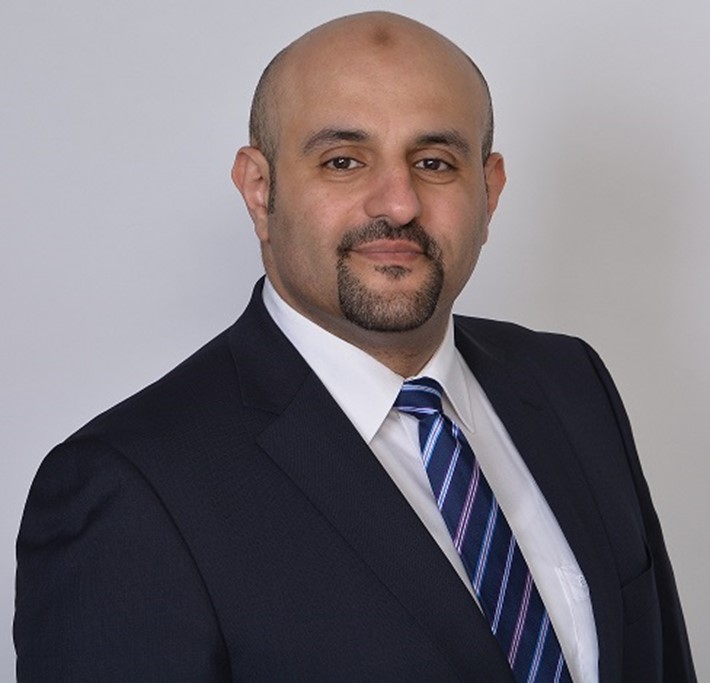
Prof. Dr. Bhaskar Choubey, Chapter Chair
Institute of Analogue Circuits and Image Sensors
Dr.-Ing. Nikolaos Athanasios Anagnostopoulos, Chapter Vice Chair
University of Passau
Li Zidu, Chapter Secretary
University of Siegen